How Jazz Choirs Are Founded and Led
Describes how a jazz choir is founded and run, from artistic direction and staffing to auditions, budgeting, nonprofit structure and long term planning.
By the District Songbook editorial teamPublished Revised Reading 6 minutes
If you want to start an adult vocal jazz group in Washington, you help decide how the music will hold together before anyone sings the first chord. Conducting is the art of directing a musical performance, such as an orchestral or choral concert. You learn what the person on the podium does, what titles mean, and which practical choices keep singers together from audition night to concert night.
What does a choir founder actually decide first?
When founding a group, you choose the works to be performed and plan how to study them. Conductors act as guides for the orchestras or choirs they conduct. They choose the works, study their scores, make adjustments such as tempo, articulation, phrasing, and repetitions of sections, work out an interpretation, and convey that vision to the performers. If you take that role, plan time to read every voice line before you teach it.
Why does one person need to set time for everyone?
You cannot keep eight or twenty singers together by listening alone once the parts move at different rhythms. The role has been defined as the art of directing the simultaneous performance of several players or singers by the use of gesture. The primary duties are to interpret the score in a way that reflects the specific indications in that score, set the tempo, ensure correct entries by ensemble members, and shape the phrasing where appropriate. Your singers watch you for entries and for the shape of each phrase.
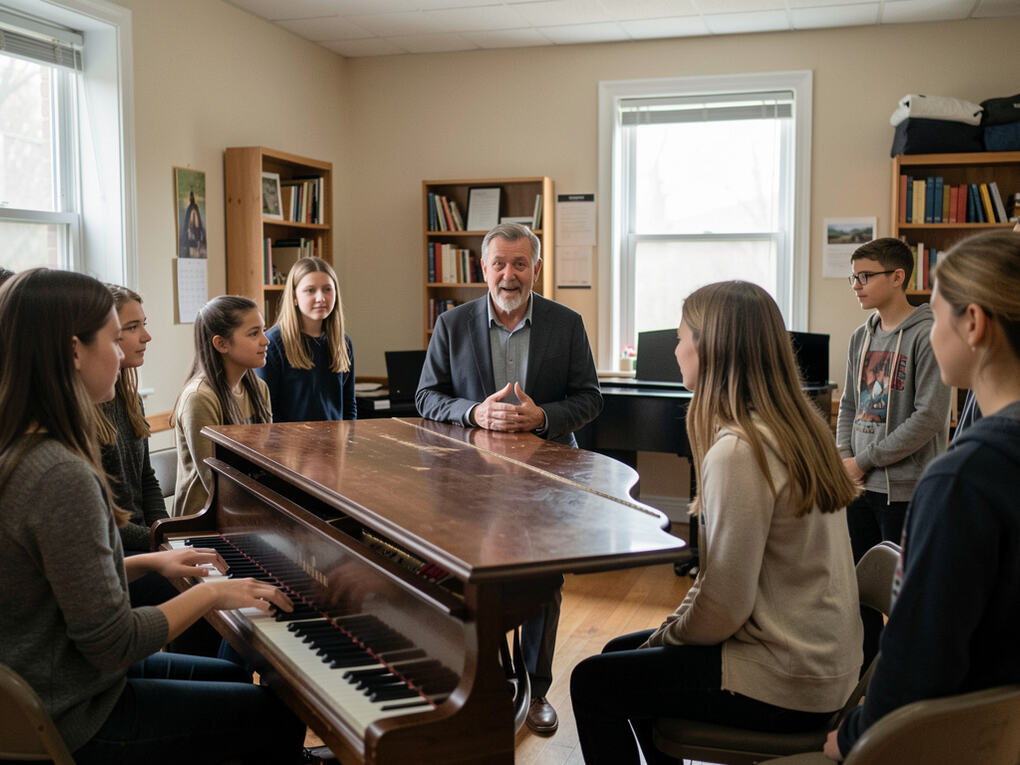
What do the hands say while voices are singing?
You conduct mainly without words while the music sounds. Conductors communicate with musicians primarily through hand gestures, usually with the aid of a baton, and may use other gestures or signals such as facial expression and eye contact. Communication is typically nonverbal during a performance. You can practice a clear beat pattern, a clean cue for each entrance, and a calm face that tells the room whether the sound should stay soft or open up. To place that work in a wider view, see this overview of the art of directing performance and how gesture carries meaning.
How does talk in rehearsal differ from silence in concert?
In rehearsal you stop, explain and try again. A conductor usually supplements direction with verbal instructions to musicians in rehearsal, and frequent interruptions in rehearsal allow verbal direction on how the music should be performed. In concert you stay quiet and guide with hands, eyes, and face. If you lead an adult vocal jazz ensemble that rehearses together, build that habit early so singers expect clear talk on Tuesday and quiet signals on Saturday.
In rehearsal you stop, explain and try again.
District Songbook, How Vocal Jazz Ensembles Work
Who stands where and why does the score sit high?
You need to see everyone and everyone needs to see you. The conductor typically stands on a raised podium with a large music stand for the full score, which contains the musical notation for all the instruments or voices. From that place you can check balance between sections and give entries without turning your back on the group. Keep your full score open and marked, so tempo notes and cues stay in one place through the season.
Should your director also play an instrument?
You have a choice to make about staffing the podium. Since the mid-nineteenth century, most conductors have not played an instrument when conducting, although in earlier periods leading an ensemble while playing an instrument was common. In Baroque music, the group would typically be led by the harpsichordist or first violinist, an approach that in modern times has been revived by several music directors for music from this period. Conducting while playing a piano or synthesizer may also be done with musical theatre pit orchestras, and a pianist may perform a concerto while also conducting the orchestra. For vocal jazz, many groups separate the roles and keep a pianist free to play, while the director keeps time and cues.
Which title fits the person on the podium?
Titles tell singers and audiences what kind of responsibility you carry. The principal conductor of an orchestra or opera company is referred to as a music director, or chief conductor, or by the German words Kapellmeister or Dirigent. Conductors of choirs or choruses are sometimes referred to as choral director, chorus master, or choirmaster, particularly for choirs associated with an orchestra. Respected senior conductors are sometimes referred to by the Italian word maestro, which translates as master or teacher. When you write your first flyer for directors, rhythm sections, and support roles, pick the title that matches the work you will actually do.
How do auditions, seasons and weekly plans get shaped?
Founding a choir is also office work. Conductors may attend to organizational matters, such as scheduling rehearsals, planning a concert season, hearing auditions and selecting members, and promoting their ensemble in the media. Orchestras, choirs, concert bands and other sizable musical ensembles, such as big bands, are usually led by conductors. You set a rehearsal calendar you can keep, you plan a season with parts your singers can learn, and you run auditions that test range, tuning, and ability to hold a part. Clear notes on how auditions work for community choirs help newcomers arrive ready to sing.
What can past practice teach a new jazz choir?
You do not need old-style beat-keeping to lead well, but it helps to know where the gestures come from. An early example of using gesture to influence a performance was cheironomy, documented as early as the 11th century, in which a leader used subtle motions of fingers or hands to dictate melodic shape and contour. Beginning in the sixteenth century, the role of Kapellmeister in Germany was filled by someone who audibly tapped the beat on a hard surface using a staff or rolled-up sheet of paper. Around 1820, it became the norm to have a dedicated conductor who did not also play an instrument during the performance, and the use of a baton became more common as it was easier to see than bare hands or rolled-up paper. Among the earliest notable conductors were Louis Spohr, Carl Maria von Weber, Louis Antoine Jullien and Felix Mendelssohn, all of whom were also composers.
Ask a singer friend to stand across the room, try a steady beat with a short stick or your hand, add eye contact for each entry, and note which cues keep the phrase together.