Inside a Choir Season in the District
Shows what a choir season looks like in the District, from concert programs and venues to rehearsal milestones, guest artists and press coverage.
By the District Songbook editorial teamPublished Revised Reading 6 minutes
You sing through a season in stages, from first reading to concert night, and you can understand each stage before you join. Chorus America describes that larger setting as singing communities supported by advocacy, connections, and resources, and it presents itself as the advocacy, research, and leadership development organization that advances the choral field.
You will see how rehearsals build skill, how directors and helpers shape the work, how concerts connect to community life, and what carries over after the last note. The Chorus America page does not publish season dates, hall names, or ticket details.
What Does a Choir Season Cover for You?
A season gives your singing a clear arc. You start with new music and new voices around you, you build blend and rhythm week by week, and you close with concerts that show what the group learned together. In Washington, that arc often runs alongside work, school, and family, so regular attendance matters more than long practice at home. You learn your line, you listen across the section, and you adjust tuning, timing, and tone in the room. Chorus America frames this kind of steady work as part of a vibrant society in which diverse singing communities affirm and share the full range and depth of shared humanity, which helps you see weekly effort as both civic and musical.
How Do Rehearsals Build Toward a Concert?
Early rehearsals focus on notes, rhythms, and text. You read through charts, mark places to breathe, and settle voice parts so that the harmony locks. Later rehearsals add shape, dynamics, and transitions between songs, so the set feels like one program rather than separate pieces. If you want a plain picture of that weekly process, read about how ensembles rehearse together and bring what you learn to your stand. Chorus America supports this side of singing with tools and training for choruses and choral leaders, which means your director has places to look for warm-up plans, score study ideas, and ways to pace a term without rushing the group.
Where Do Tools and Training Fit In?
Tools are practical. You use a folder or tablet, a pencil, water, and clear markings for cuts, repeats, and pronunciation. Training takes longer. You build breath control, vowel matching, listening skills, and stage habits that keep pitch steady under lights. Leaders also keep learning, through workshops, peer exchange, and access to shared resources that help choruses contribute to their communities. When your section struggles with a passage, you can ask what tool would help, such as a slower run, a sectional repeat, or a rhythm drill, and you can expect the director to choose one clear task at a time.
How Do Directors Shape the Arc?
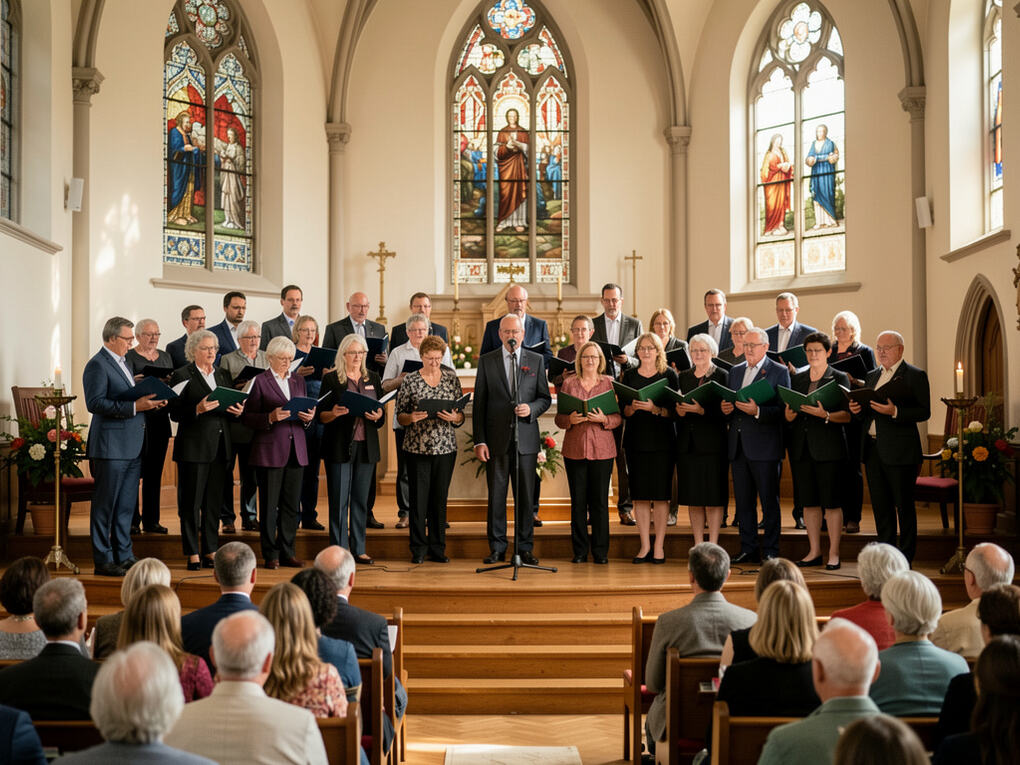
A director sets the path from first night to performance. The role includes choosing repertoire that fits the voices in the room, planning how many weeks each piece needs, and balancing challenge with confidence. Support roles matter too, from a section leader who steadies entrances to a pianist or rhythm player who holds tempo while you learn. Chorus America speaks directly to those leaders, offering leadership development and peer contact so directors and managers do not work alone. For you as a singer, the result is simple: you know what to prepare, you know how each rehearsal moves the program forward, and you know what good singing sounds like in that group.
A director sets the path from first night to performance.
District Songbook, Singing in Washington DC
What Holds the Middle of the Season Together?
The middle weeks test focus. Notes are mostly learned, but memory, stamina, and blend still need work. You help by arriving warmed up, marking changes, and singing at a level that lets you hear others. Choruses stay stronger when they can draw on resources for singing communities alongside local habits like sign-in sheets, clear calendars, and shared expectations for attendance. You also start to hear the program as an audience might, with openers that settle nerves, middle pieces that ask for control, and closers that invite full sound, which keeps motivation steady when repetition feels long.
How Do Concerts Reflect Community Life?
A concert is a meeting point. You sing, neighbors listen, and the room feels the work of many weeks in one evening. Programs often link music to place, season, or shared theme, and spoken notes help listeners follow the story without heavy explanation. To picture the rooms where that happens in the capital, look at where District choirs perform before your concert week. Chorus America states that it supports choruses so they are better able to contribute to their communities, and you can hear that aim when a program welcomes new listeners, thanks volunteers, and leaves space for applause, silence, and response.
Who Stands With You Beyond Your Section?
Concerts rarely rest on singers alone. You may share the stage with instrumental players, share tasks with crew, or share the evening with another vocal group that brings a different tone. Collaboration asks for clear cues, agreed-upon pitch, and respect for each group's sound. You rehearse entrances and exits, you watch the director for tempo shifts, and you keep stage noise low so transitions stay clean. Chorus America encourages connection among colleagues who care about choral music and each other, and that spirit shows when singers listen across ensembles, thank collaborators by name in the program, and adjust quickly if balance shifts in a live room.
What Do Listeners Carry Home?
After a show, listeners remember the feeling as much as the detail. They recall a quiet ending that held attention, a rhythmic piece that lifted the room, or a lyric that matched their own week. You will not always hear what landed, since applause tells only part of the story. Some groups collect brief comments, local coverage, or photos for the archive, while others keep it simple with a thank-you at the door. If you are curious about finding such chances as a singer, start with singing in Washington and notice how groups describe past programs. What matters for you is that the concert closes the arc with care, on time, in tune, and together.
How Do You Carry One Season Into the Next?
A season ends, but skill stays. You keep marked scores, you note which habits helped your voice, and you remember which rehearsal routines improved your reading. Many singers use the break to rest the voice, review tricky rhythms, and decide what role fits next term, whether that means staying in the same section, trying a new part, or volunteering for setup and welcome duties. Chorus America invites singers and leaders to connect with peers who share an interest in choral music, which can give you ideas for the year ahead. Ask your director what to practice first when rehearsals resume, and write down one musical goal to bring to the first night.